
Georgia Farm-to-Table Restaurants

Real Food. Real Sourcing. Across One of America’s Most Diverse Agricultural States.

Georgia is not one food region.

It is mountains and trout streams. Coastal shrimp boats and oyster beds. Peach orchards, peanut fields, pecan groves, vineyards, cattle farms, heritage grains, family gardens, urban growers and independent producers working in communities across the state.

That diversity has helped create one of the South’s most compelling regional dining cultures.

From chef-driven restaurants in Atlanta and Athens to seafood kitchens along the Georgia coast, restaurants across the state are building menus around what Georgia farmers, fishermen, ranchers, millers, cheesemakers, bakers, orchardists and artisan producers can provide.

At Cucina di Madre Terra, we believe farm-to-table should describe a real relationship, not a convenient marketing phrase.

This guide highlights Georgia restaurants demonstrating a meaningful commitment to seasonal cooking, regional sourcing and the people responsible for producing our food.

Some purchase directly from nearby farms. Others work with regional distributors that connect small producers with independent kitchens. Some build menus around Georgia seafood, local meat, heritage grains or seasonal produce. Many do several of these things at once.

Together, they help strengthen a connected food economy in which restaurants succeed because producers can continue growing, raising, catching, harvesting and making food close to home.

Whether you are exploring Atlanta, Savannah, Athens, Augusta, Macon, Columbus, the North Georgia mountains, the Golden Isles or Georgia’s rural agricultural communities, this guide is designed to help you find restaurants where the story begins long before the plate reaches the table.


Georgia’s Regional Food Story

Georgia is broad, geographically diverse and agriculturally complex. Its food traditions change significantly as you travel from the Appalachian foothills to the Atlantic coast.

A farm-to-table restaurant in Blue Ridge may build a menu around trout, apples, mushrooms, mountain vegetables and local livestock. A restaurant in Savannah may focus on shrimp, oysters, blue crab, rice, seasonal produce and Lowcountry foodways. An Atlanta kitchen may work with a network of farms from throughout North and Central Georgia.

Understanding those regional differences is essential to understanding Georgia food.


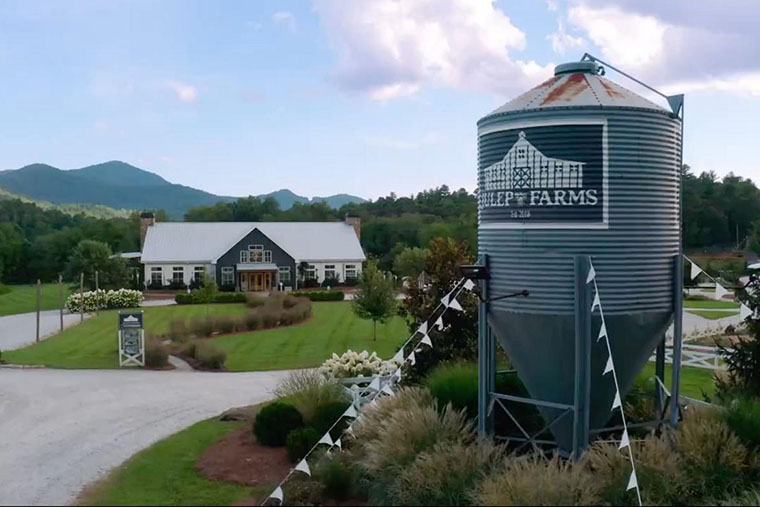
From mountain orchards to family vineyards, North Georgia's agricultural heritage continues to inspire restaurants committed to seasonal, locally sourced cuisine
Beyond the mountain vistas lies a thriving network of growers, ranchers, vintners and artisan producers whose work defines North Georgia's farm-to-table experience

North Georgia Mountains: Where Georgia's Agricultural Heritage Reaches New Heights

North Georgia's farm-to-table story begins in the mountains.

Cooler temperatures, rich valleys, clear streams and generations of family farms have created one of the South's most distinctive agricultural landscapes. Here, orchards climb rolling hillsides, vineyards overlook mountain ridges, trout streams wind through protected forests and small farms continue traditions that have shaped the region for generations.

The region extends far beyond a single destination. Blue Ridge, Ellijay, Dahlonega, Blairsville, Clayton, Hiawassee, Helen and dozens of smaller communities each contribute to a food culture rooted in seasonality, craftsmanship and a deep connection to the land.

North Georgia is known for much more than apples, although its orchards have become legendary throughout the Southeast. Local farms also produce berries, heirloom vegetables, mushrooms, herbs, pasture-raised beef, lamb, pork, artisan cheeses, honey and wines that reflect the unique character of the mountain landscape. Trout farms and mountain streams contribute another defining element to the region's culinary identity.

Many of the area's restaurants have embraced these seasonal ingredients, building relationships with nearby growers, ranchers, vineyards, mills and artisan food producers. Others work with farms throughout Northeast Georgia to create menus that change with the harvest rather than relying on the same ingredients year-round.

Agritourism has also become an essential part of the mountain economy. Family orchards, wineries, lavender farms, farmers markets, heritage livestock operations and farm experiences invite visitors to meet the people behind their food while strengthening the communities that depend upon agriculture.

The strongest North Georgia farm-to-table restaurants understand that mountain cuisine is more than rustic presentation or scenic views. It is built upon transparency, respect for seasonal harvests and lasting relationships with the farmers and food producers who make each meal possible.

The restaurants featured below represent only a portion of this remarkable region. Together they demonstrate how North Georgia continues to preserve agricultural traditions while helping define the future of Georgia's local food movement.

Explore North Georgia farm-to-table restaurants connecting mountain communities with orchards, vineyards, family farms, trout streams and artisan food producers.


Jump to North Georgia Farm-to-Table Restaurant Listings


Atlanta skyline and neighborhoods representing Georgia's farm-to-table food culture
Atlanta's diverse neighborhoods, surrounding communities and regional producers create one of the Southeast's most dynamic local food ecosystems.

Atlanta: Georgia's Largest Local Food Marketplace

Atlanta is not simply Georgia's largest city. It is the state's largest marketplace for local food. Every day, restaurants across Atlanta purchase produce from North Georgia farms, vegetables from east Georgia growers, pasture-raised beef from rural ranches, artisan cheeses from small dairies, heritage grains from regional mills and seasonal seafood from Georgia's coast. The city's dining scene connects hundreds of producers with millions of residents and visitors each year, making Atlanta one of the most influential food economies in the Southeast.

But Atlanta is not one restaurant district.

Its local food story stretches from Midtown, Buckhead, West Midtown and Downtown to Inman Park, Old Fourth Ward, Grant Park, Summerhill, East Atlanta Village, West End and the neighborhoods surrounding the BeltLine. Beyond the city itself, communities including Decatur, Roswell, Alpharetta, Marietta, Sandy Springs, Brookhaven, Chamblee, Doraville, Tucker, College Park and Peachtree City each contribute their own restaurants, farmers markets, food makers and culinary traditions to the region's connected food ecosystem.

Atlanta is also one of America's most culturally diverse food cities. Along Buford Highway and throughout Gwinnett County, restaurants representing dozens of global cuisines create demand for locally grown vegetables, herbs and specialty crops that continue to expand what Georgia agriculture can produce. At the same time, urban farms, neighborhood gardens and community markets remind us that food is grown inside the city as well as beyond it.

The restaurants featured here represent only a small portion of Metro Atlanta's evolving farm-to-table movement. Many have built long-standing relationships with Georgia farmers, ranchers, fishermen and artisan producers. Others are helping redefine what authentic local sourcing looks like in one of the South's fastest-growing metropolitan regions.

Atlanta's food story is far too large to tell on one page.

Explore our complete Atlanta Farm-to-Table Guide for neighborhood-by-neighborhood coverage, surrounding cities, producer relationships, urban agriculture and restaurants helping shape the future of Georgia's local food economy.


Jump to Atlanta Area Farm-to-Table Restaurant Listings


Beyond the University of Georgia campus, Athens serves as the gateway to a thriving network of Northeast Georgia farms, markets and restaurants rooted in seasonal, locally sourced food
Athens blends creativity, education and agriculture, connecting Northeast Georgia's family farms, artisan producers and seasonal harvests with one of the state's most dynamic restaurant communities.

Athens & Northeast Georgia: Innovation Rooted in the Land

Athens has long been known as one of the South's great college towns, but its food story extends well beyond the University of Georgia campus.

The city serves as the cultural and culinary center of Northeast Georgia, connecting restaurants with family farms, livestock producers, artisan food makers and agricultural communities stretching across Oconee, Madison, Jackson, Oglethorpe, Morgan, Walton and surrounding counties.

This is a region where innovation and tradition meet naturally. Academic research, sustainable agriculture, historic farming communities and an entrepreneurial restaurant culture have helped create one of Georgia's strongest environments for local food. Farmers markets, community-supported agriculture programs, specialty growers and small family farms continue to supply restaurants with seasonal ingredients that reflect both the landscape and the people who steward it.

Northeast Georgia's farms produce an impressive variety of foods, including pasture-raised beef and pork, poultry, goat cheeses, fresh vegetables, heirloom fruits, herbs, mushrooms, honey and specialty grains. Vineyards, orchards and artisan producers continue to expand the region's agricultural diversity while preserving its rural character.

Athens restaurants have become important partners in that regional food economy. Many work directly with nearby growers, ranchers, cheesemakers and farmers markets to build menus around seasonal harvests rather than relying on year-round availability. These relationships create dependable markets for producers while offering diners a more authentic connection to Georgia agriculture.

The surrounding communities each contribute their own character to the region. Watkinsville, Madison, Monroe, Jefferson, Commerce and neighboring towns preserve strong agricultural traditions while supporting a growing network of independent farms and food businesses. Together they form a connected food landscape that reaches far beyond the city limits.

The strongest farm-to-table restaurants in Athens understand that local food is not simply a trend or a marketing phrase. It is an ongoing partnership built on trust, transparency and respect for the people who grow, raise and produce the food.

The restaurants featured below represent a region that continues to demonstrate how higher education, entrepreneurial chefs and Georgia agriculture can work together to strengthen local economies and preserve working farmland for future generations.

Explore Athens and Northeast Georgia farm-to-table restaurants connecting communities, family farms, artisan producers and seasonal harvests across one of Georgia's most vibrant agricultural regions.


Jump to Athens Area Farm-to-Table Restaurant Listings


At the center of Georgia, Macon serves as the gateway to one of the South's richest agricultural regions, where generations of farmers continue to shape the flavors of every season
Macon stands at the crossroads of Georgia's agricultural heartland, connecting Middle Georgia's orchards, family farms, ranches and artisan producers with restaurants celebrating the region's seasonal harvests.

Central Georgia & Macon: The Heart of Georgia's Agricultural Landscape

Central Georgia has long been known as the heart of the state, not simply because of its geography, but because agriculture remains woven into everyday life across the region.

Macon serves as the region's cultural and culinary center, connecting restaurants with the orchards, pecan groves, cattle farms, vegetable growers and family operations that stretch across Middle Georgia. Together, these communities form one of the state's most productive and enduring agricultural landscapes.

The region extends well beyond Macon itself. Perry, Warner Robins, Milledgeville, Forsyth, Dublin, Gray and numerous rural communities each contribute to a food system shaped by generations of farming, craftsmanship and Southern hospitality. Here, agriculture is not preserved as history—it remains an active part of the local economy and identity.

Central Georgia is known around the world for its peaches, but the region produces far more than its signature fruit. Pecans, blueberries, watermelons, tomatoes, sweet corn, peppers, onions, beef, poultry and pasture-raised livestock all contribute to the diversity of Middle Georgia agriculture. Local honey, artisan baked goods, specialty products and seasonal produce continue to strengthen relationships between producers and the restaurants that serve them.

Restaurants throughout the region have an opportunity to showcase this abundance by building menus around Georgia's growing seasons rather than relying on ingredients shipped from thousands of miles away. The strongest establishments cultivate lasting relationships with nearby farmers, ranchers, orchardists, mills and artisan food producers, creating dependable markets that help preserve working farms for future generations.

Central Georgia also serves as an important crossroads for food distribution throughout the state. Producers supplying local restaurants often reach communities far beyond Middle Georgia, making the region an essential link between rural agriculture and Georgia's growing urban populations.

The restaurants featured below reflect a region where tradition and innovation continue to work together. Some celebrate generations-old Southern recipes, while others reinterpret Georgia ingredients through contemporary culinary techniques. What they share is an opportunity to strengthen the connection between the people who produce the food and those who gather around the table.

Explore Central Georgia and Macon farm-to-table restaurants celebrating the farms, orchards, ranches and artisan producers that continue to define the heart of Georgia's agricultural heritage.


Jump to Macon & Central Georgia Farm-to-Table Restaurant Listings


Augusta stands where Georgia and South Carolina's agricultural traditions meet, creating a connected food landscape built on family farms, seasonal harvests and generations of regional craftsmanship
The Savannah River unites rather than divides the CSRA, connecting Augusta with the farms, orchards and family producers that shape one of the Southeast's most distinctive regional food economies.

Augusta & the CSRA: Where Two States Share One Food Story

Augusta occupies a unique place in Georgia's agricultural landscape. Situated along the Savannah River, the city serves as the gateway to the Central Savannah River Area (CSRA), where the farms, orchards, forests and rural communities of eastern Georgia and western South Carolina come together to create one connected regional food economy.

While the Savannah River marks the state line, it has never divided the region's agricultural heritage. Farmers, ranchers, orchardists, beekeepers and food producers on both sides of the river have long supplied the markets, restaurants and communities that define the CSRA. Augusta has become the commercial and culinary center where many of those relationships converge.

The region extends well beyond downtown Augusta. Evans, Grovetown, Harlem, Appling and communities throughout Columbia and Burke counties contribute to Georgia's agricultural identity, while nearby North Augusta, Aiken and Edgefield strengthen the cross-border character of the region. Together they create a diverse landscape of working farms, small towns and independent food businesses.

Eastern Georgia produces an abundance of seasonal vegetables, peaches, pecans, blueberries, sweet corn, tomatoes, peppers, onions, pasture-raised livestock, honey and specialty crops. Family farms remain central to the region's economy, while farmers markets, artisan producers and community-supported agriculture programs continue to strengthen the connection between producers and local consumers.

Restaurants throughout Augusta and the CSRA have an opportunity to showcase this remarkable agricultural diversity. The strongest farm-to-table establishments build lasting relationships with nearby growers, ranchers, orchards, beekeepers and artisan food makers, allowing seasonal harvests to shape their menus while giving proper recognition to the people behind the ingredients.

The region also reflects the blending of culinary traditions found along the Georgia-South Carolina border. Southern cooking, Lowcountry influences, barbecue traditions and contemporary regional cuisine all contribute to a food culture that is distinctly local while drawing inspiration from both sides of the Savannah River.

The restaurants featured below represent different expressions of this shared regional identity. Some purchase directly from nearby farms, while others work through trusted markets and regional suppliers. The most meaningful recognize that farm-to-table is defined not by geography alone, but by transparency, long-term relationships and a genuine commitment to the producers who sustain the region.

Explore Augusta and the Central Savannah River Area's farm-to-table restaurants connecting Georgia and South Carolina farms, family producers and seasonal harvests through one of the Southeast's most distinctive regional food traditions.


Jump to Augusta Area Farm-to-Table Restaurant Listings


At dusk, Savannah reveals its timeless charm. Beyond the city lights, Georgia's farms, rivers and coastal waters continue the work that brings the region's tables to life
Beneath Savannah's historic skyline lies one of the South's most connected food ecosystems, linking chefs with farmers, fishermen, oyster growers and artisan producers across Coastal Georgia.

Savannah and Coastal Georgia: Where the Land Meets the Water

Savannah’s food story begins long before a plate reaches the table.

It begins in tidal creeks and oyster beds, aboard shrimp boats leaving the dock before sunrise, in coastal fields, family gardens and rural communities stretching south toward Brunswick and north through the Coastal Empire.

Few places in Georgia possess a food identity as distinctive as Savannah and the surrounding coast.

Wild Georgia shrimp, oysters, blue crab, seasonal fish, rice, benne, field peas, greens and coastal vegetables are more than regional ingredients. They reflect generations of work, adaptation and cultural knowledge shaped by the marshes, rivers, islands and agricultural lands of coastal Georgia.

Savannah stands at the center of that story, but the region extends far beyond the Historic District.

Thunderbolt and Tybee Island remain closely tied to working waters and seafood traditions. Richmond Hill, Bryan County, Liberty County and McIntosh County connect the city with growers, fishermen and rural communities farther down the coast. Brunswick and the Golden Isles contribute their own seafood heritage, barrier-island traditions and relationships with Georgia’s coastal producers.

Savannah’s neighborhoods also give the city’s restaurant culture its character.

The Historic District introduces millions of visitors to Southern and Lowcountry cooking. The Victorian District and Forsyth Park connect residents and chefs with one of the region’s most important community farmers markets. Starland has become a center for independent restaurants, bakeries, cafés and food businesses willing to experiment while remaining rooted in place. Nearby communities such as Isle of Hope, Wilmington Island and Skidaway Island create additional markets for local seafood and regional ingredients.

The strongest Savannah farm-to-table restaurants understand that coastal food is not simply a menu style.

It is a relationship with the people who catch, grow, harvest and prepare the food.

Serving shrimp near the water does not automatically support Georgia shrimpers. Placing oysters on a menu does not explain where they were grown or harvested. Describing a dish as Lowcountry does not, by itself, recognize the Gullah Geechee traditions and agricultural knowledge that helped shape the region’s cuisine.

Real coastal sourcing requires transparency.

It means identifying Georgia fishermen, oyster growers, farmers, millers and regional suppliers whenever possible. It means allowing seasons, weather, harvest conditions and responsible fisheries to influence the menu. It means recognizing that seafood availability can change and that a genuine local menu may need to change with it.

Savannah restaurants have an extraordinary opportunity.

They can introduce visitors from around the world to the people and landscapes behind Georgia food. They can create dependable markets for coastal producers. They can preserve regional food traditions while helping them remain economically relevant to another generation.

The restaurants featured below represent different approaches to seasonal cooking and regional sourcing. Some work directly with farmers and fishermen. Others purchase through trusted markets, seafood dealers and regional suppliers. The most meaningful make those relationships visible and treat the producer as part of the dining experience rather than a footnote behind it.

Explore Savannah and Coastal Georgia farm-to-table restaurants connecting the city’s kitchens with Georgia’s farms, fisheries, oyster beds, markets and food traditions.


Jump to Savannah Farm-to-Table Restaurant Listings


Along Georgia's working coast, the tides connect barrier islands, shrimp boats, oyster beds and coastal farms into one of the Southeast's most distinctive regional food ecosystems.
Georgia's Golden Isles are more than a coastal destination—they are home to working waterfronts, barrier islands and generations of shrimpers, fishermen, oyster growers and family farms that continue to define the region's remarkable food culture.

Brunswick & the Golden Isles: Georgia's Working Coast

Georgia's coast is often celebrated for its beauty, but around Brunswick and the Golden Isles, it is equally defined by the people who continue to make their living from the water.

Brunswick serves as the commercial heart of Georgia's working coast, connecting restaurants, seafood markets and coastal communities with generations of shrimpers, fishermen, oyster growers and maritime businesses. Together with St. Simons Island, Sea Island, Jekyll Island and Little St. Simons Island, the region represents one of the Southeast's most distinctive coastal food traditions.

The tides shape life here as much as the calendar. Georgia shrimp, oysters, blue crab and seasonal fish remain at the center of the region's culinary identity, while nearby farms contribute vegetables, citrus, herbs, honey and specialty crops that complement the bounty of the coast. Salt marshes, maritime forests and barrier islands create ecosystems unlike anywhere else in the country, influencing both what can be harvested and how local food has evolved over generations.

The Golden Isles have long welcomed visitors seeking beaches and outdoor recreation, but the region offers something equally memorable: the opportunity to experience food deeply connected to place. Restaurants overlooking working waterfronts, neighborhood seafood markets and locally owned cafés all have the ability to introduce guests to the producers whose work begins long before a meal reaches the table.

The strongest farm-to-table restaurants in the Golden Isles recognize that fresh seafood alone does not define responsible sourcing. Real transparency means identifying Georgia shrimpers, oyster growers, fishermen and nearby farms whenever possible, allowing seasonal harvests and responsible fisheries to guide the menu rather than relying on generic claims of freshness.

The surrounding communities each contribute to this connected coastal food economy. Darien, Woodbine, Kingsland and neighboring rural areas support family farms, seafood businesses and artisan producers whose products find their way into restaurants throughout the region. Together they demonstrate that Coastal Georgia is sustained by both the land and the sea.

The restaurants featured below reflect a region where maritime heritage, Southern hospitality and agricultural traditions come together in ways found nowhere else in Georgia. They celebrate not only exceptional ingredients, but also the people whose livelihoods depend upon healthy waters, productive farmland and a thriving local food economy.

Explore Brunswick and the Golden Isles farm-to-table restaurants connecting Georgia's barrier islands, working waterfronts, family farms and coastal food traditions.


Jump to Brunswick & Golden Isles Farm-to-Table Restaurant Listings


From pecan groves and peanut fields to vegetable farms and cattle ranches, South Georgia remains one of America's most productive agricultural landscapes and the foundation of Georgia's local food economy
South Georgia's fertile fields produce far more than crops—they sustain family farms, rural communities and the regional food systems that feed Georgia and much of the Southeast.

South Georgia: The Agricultural Engine of the State

South Georgia is where much of Georgia's food begins.

Stretching from the Flint River Basin to the Florida state line, this vast agricultural region is home to some of the most productive farmland in the United States. Its fertile soils, long growing season and generations of farming knowledge have made South Georgia an essential supplier of fresh food for communities throughout the Southeast and far beyond.

The region extends across a network of communities that each contribute to its agricultural identity. Thomasville, Valdosta, Tifton, Moultrie, Albany, Bainbridge, Americus, Cordele, Quitman and dozens of smaller towns remain deeply connected to the land, where farming is not simply an industry but a way of life passed from one generation to the next.

South Georgia's agricultural diversity is extraordinary. The region is internationally recognized for peanuts and pecans, but its fields also produce blueberries, watermelons, sweet corn, tomatoes, peppers, onions, cucumbers, squash, leafy greens and a wide variety of seasonal vegetables. Cattle ranches, poultry operations, specialty crop growers, honey producers and family orchards contribute to one of the most resilient and productive food economies in the country.

Many of Georgia's most celebrated restaurants rely on ingredients that begin their journey in South Georgia. Yet the producers responsible for growing that food often remain invisible to the diners who ultimately enjoy it. One of the greatest opportunities for Georgia's farm-to-table movement is creating stronger recognition for the farmers, ranchers and food producers whose work supports kitchens across the state.

Restaurants throughout South Georgia are uniquely positioned to lead by example. Rather than treating local sourcing as a marketing trend, they have direct access to an abundance of nearby farms and seasonal harvests. The strongest establishments build long-term relationships with growers, livestock producers, orchards, beekeepers and artisan food makers, allowing the rhythm of the harvest to shape their menus throughout the year.

The region's culinary traditions are equally rich. Generations of Southern cooking, barbecue, field suppers, family farms and community gatherings have created a food culture rooted in hospitality, resourcefulness and respect for the land. Today, a new generation of chefs and food entrepreneurs is building upon that heritage while introducing innovative approaches to regional cuisine.

The restaurants featured below represent communities that understand an important truth: farm-to-table is not a trend imported from elsewhere. In South Georgia, it has long been part of everyday life. The challenge today is making those relationships more visible so producers receive the recognition and economic support they deserve.

Explore South Georgia farm-to-table restaurants celebrating one of America's most productive agricultural regions and the farmers, ranchers and food producers who make it possible.


Jump to South Georgia Area Farm-to-Table Restaurant Listings


The Chattahoochee River has long connected the farms, ranches and communities of West Georgia, making Columbus the gateway to one of the state's most authentic regional food traditions
Columbus bridges Georgia's agricultural heartland with the Chattahoochee Valley, where family farms, rolling pastureland and seasonal harvests continue to shape the region's culinary identity.

Columbus & West Georgia: Where the Chattahoochee Connects Communities

West Georgia's food story follows the Chattahoochee River.

For generations, the river has linked farms, ranches, mills and communities across the Georgia-Alabama border, creating a regional food economy shaped as much by shared landscapes as by state lines. Columbus stands at the center of that story, serving as the commercial, cultural and culinary gateway to one of Georgia's most productive agricultural regions.

The region stretches well beyond Columbus itself. Pine Mountain, Hamilton, LaGrange, Newnan, West Point, Warm Springs and numerous rural communities contribute to a landscape of working farms, cattle ranches, orchards, vegetable growers and artisan food businesses. Together they form a connected agricultural network that continues to support both local communities and restaurants throughout the region.

West Georgia is known for its pasture-raised beef, poultry, pecans, peaches, blueberries, sweet corn, tomatoes, peppers, squash and seasonal vegetables. Family farms remain the foundation of the regional economy, while specialty producers, beekeepers, cheesemakers and small food artisans continue to expand the diversity of locally produced foods available throughout the Chattahoochee Valley.

The region's natural beauty has also helped agritourism flourish. Visitors exploring Callaway Gardens, F.D. Roosevelt State Park, the Pine Mountain Ridge and the Chattahoochee River increasingly discover farm markets, vineyards, orchards, U-pick operations and locally owned food businesses that showcase the area's agricultural heritage alongside its outdoor recreation.

Restaurants throughout Columbus and West Georgia have an opportunity to celebrate these nearby producers by building menus around seasonal harvests and lasting relationships rather than convenience alone. The strongest farm-to-table establishments recognize that transparency begins with knowing the people behind the ingredients and giving those farmers, ranchers and food producers the visibility they deserve.

West Georgia also reflects a blend of culinary traditions shaped by generations of Southern cooking, rural agriculture and cross-border influences from neighboring Alabama. That shared heritage has created a food culture rooted in hospitality, craftsmanship and respect for the land, while a new generation of chefs continues to reinterpret those traditions through seasonal and locally sourced cuisine.

The restaurants featured below represent communities working to strengthen the connection between producers and diners across the Chattahoochee Valley. Whether sourcing from nearby cattle ranches, vegetable growers, orchards or artisan food makers, they demonstrate that farm-to-table is ultimately about building relationships that sustain both local agriculture and the communities it serves.

Explore Columbus and West Georgia farm-to-table restaurants connecting the Chattahoochee Valley's farms, ranches, orchards and artisan producers with one of Georgia's most welcoming regional food cultures.


Jump to Columbus & West Georgia Farm-to-Table Restaurant Listings


What Makes a Georgia Farm-to-Table Restaurant?

Not every restaurant using the phrase “farm-to-table” follows the same sourcing practices.

For some, it reflects longstanding relationships with nearby farms. For others, it may describe only one or two seasonal ingredients. In some cases, the phrase appears on a website or menu without any explanation of where the food actually comes from.

Cucina di Madre Terra believes genuine farm-to-table dining should be supported by transparency, consistency and identifiable relationships within the regional food economy.

Restaurants highlighted through Cucina may demonstrate several of the following characteristics:

  • Menus that change with the seasons.
  • Direct relationships with Georgia farmers and food producers.
  • Regular use of Georgia-grown fruits, vegetables, herbs and grains.
  • Locally or regionally raised meat and poultry when available.
  • Support for Georgia fishermen, shrimpers, oyster growers and seafood harvesters.
  • Recognition of farms and producers on menus, websites or social media.
  • Participation in farmers markets, producer events or regional food initiatives.
  • Responsible purchasing practices that help small producers remain economically viable.
  • Staff members who can explain where key ingredients originate.
  • A demonstrated commitment to Georgia’s broader local food community.

No restaurant will source every ingredient locally throughout the year. Georgia has seasons, supply limitations, weather disruptions and agricultural realities.

The important distinction is whether local sourcing is treated as a meaningful operating commitment or simply as a phrase used to attract attention.


Farm-to-Table Is a Relationship, Not a Slogan

A restaurant does not become farm-to-table because the words appear on a menu.

It becomes farm-to-table by developing relationships with the people responsible for the food.

That may mean planning menus around a farmer’s harvest. Purchasing whole animals from a regional rancher. Featuring Georgia shrimp when the season and supply allow. Naming the orchard responsible for the apples, the mill responsible for the grain or the cheesemaker responsible for the cheese.

Real sourcing requires communication, flexibility and trust.

It also requires diners to recognize that seasonal food may not look exactly the same every week. A dish may change because the harvest changed. A vegetable may disappear from the menu because the season ended. Seafood availability may shift because of weather, water conditions or responsible harvesting practices.

Those changes are not inconveniences. They are evidence that the restaurant is responding to real agriculture rather than forcing a permanent menu onto a seasonal food system.


Questions to Ask Before You Believe the Menu

Consumers have more power than they may realize.

When restaurants know that diners care about sourcing, they have a stronger reason to support farms, fishermen and producers. Asking respectful questions can help make transparency part of the dining experience.

Consider asking:

  • Which farms or producers do you work with?
  • Which ingredients on the menu are from Georgia?
  • Is the seafood locally or regionally harvested?
  • Does the menu change based on seasonal availability?
  • Are any of the meats raised by Georgia farmers?
  • Do you purchase directly from producers?
  • Where can I learn more about the farms behind the menu?

A server may not have every answer immediately, and that alone does not mean a restaurant lacks commitment.

The broader question is whether the restaurant is willing and able to explain its sourcing practices with honesty.


Cucina’s Farm-to-Table Excellence Recognition™

Cucina di Madre Terra is developing a more transparent way to recognize restaurants that demonstrate meaningful support for farms, producers and regional food systems.

The Farm-to-Table Excellence Recognition™ program is designed to move beyond vague claims and highlight restaurants based on visible practices, producer relationships, sourcing transparency and sustained commitment.

Discovered

A restaurant has been identified as potentially supporting local or regional producers and has been added to Cucina’s discovery network for further review.

Recognized

A restaurant demonstrates credible sourcing practices, identifies local ingredients or producer relationships and shows a meaningful commitment to its regional food economy.

Excellence

A restaurant demonstrates an exceptional and sustained commitment to local sourcing, producer visibility, seasonal menus, transparency and support for the wider food community.

Recognition is not intended to create another empty badge.

It is intended to give diners better information, give deserving restaurants greater visibility and ensure that the producers behind the food are part of the story.


Why Supporting Farm-to-Table Restaurants Matters

A local meal can create an impact far beyond the restaurant.

It can help a farmer plant another season. It can support a rancher maintaining land under agricultural use. It can help a fisherman continue working Georgia waters. It can create demand for a miller, beekeeper, baker, orchardist, cheesemaker or food artisan trying to build a viable business.

That spending circulates through the local economy.

It supports jobs, preserves agricultural knowledge, strengthens rural communities, protects working landscapes and gives younger producers a reason to believe there may be a future in food and farming.

Restaurants are one of the most important bridges between producers and the public.

When a chef identifies a farmer on the menu, the producer becomes visible. When a server explains where the shrimp was caught, the guest gains a deeper connection to the coast. When a restaurant consistently purchases locally, the producer gains a more reliable market.

This is how regional food systems become stronger: not through slogans, but through repeated decisions made by restaurants, diners and communities.


Frequently Asked Questions About Georgia Farm-to-Table Restaurants

What is a farm-to-table restaurant?

A farm-to-table restaurant emphasizes ingredients sourced directly or regionally from farms, fishermen, ranchers and food producers. The strongest farm-to-table restaurants also provide transparency about those relationships and adjust menus based on seasonal availability.

Does farm-to-table mean every ingredient is local?

No. Most restaurants cannot source every ingredient locally throughout the entire year. Genuine farm-to-table dining is better measured by the restaurant’s overall sourcing commitment, producer relationships, seasonal practices and transparency.

Where are the best farm-to-table restaurants in Georgia?

Georgia has notable farm-to-table restaurants in Atlanta, Athens, Savannah, Augusta, Macon, Columbus, North Georgia, the Golden Isles, Thomasville and other communities throughout the state.

What foods are grown or produced in Georgia?

Georgia produces peaches, peanuts, pecans, blueberries, vegetables, apples, grapes, grains, beef, poultry, pork, dairy products, honey and many specialty crops. Georgia’s coast also supports shrimp, oysters, crab and regional fisheries.

How can I tell whether a restaurant really supports local farms?

Look for named farms and producers on the menu, seasonal menu changes, sourcing information on the restaurant’s website, participation in local food events and staff members who can explain where key ingredients come from.

Why are seasonal menus important?

Seasonal menus allow restaurants to respond to what farms and producers can realistically provide. They can also improve freshness, strengthen producer relationships and help diners understand the natural rhythms of agriculture.

Are Georgia seafood restaurants considered farm-to-table?

Restaurants supporting local fishermen, shrimpers, oyster growers and regional seafood harvesters are an important part of Georgia’s farm-to-table and local food economy. The broader concept includes food from farms, waters and independent producers.

Does Cucina verify every restaurant listed?

Restaurants may appear at different stages of discovery and review. Cucina’s developing recognition program is intended to distinguish between restaurants that have been identified, those demonstrating credible local sourcing and those showing sustained excellence.


Supporting Georgia’s Local Food Economy

Every meal is an opportunity to support more than a restaurant.

It can support a farmer deciding whether to plant another season. A family orchard preserving generations of knowledge. A shrimp captain leaving the dock before sunrise. A cattle farmer protecting working land. A cheesemaker experimenting with Georgia milk. A market gardener supplying neighborhoods one harvest at a time.

Restaurants become stronger when producers thrive.

Communities become stronger when diners intentionally support both.

That is the connected food ecosystem Cucina di Madre Terra exists to recognize, strengthen and celebrate.


Know a Georgia Restaurant That Belongs Here?

Georgia’s local food community is constantly changing.

New restaurants open. Chefs develop new farm relationships. Producers expand into new markets. Existing restaurants deepen their sourcing commitments but may remain largely unknown outside their immediate communities.

If you know a Georgia restaurant demonstrating meaningful support for local farms, fishermen, growers, ranchers or regional producers, we want to hear about it.

Help Cucina di Madre Terra discover the restaurants doing the real work of connecting Georgia’s farms, waters, kitchens and communities.

Farm-to-table is not defined by distance alone. It is defined by relationships, transparency and a genuine commitment to the people who produce our food.