Some stories begin with a business plan. This one begins with a grandfather, a field, and a pair of harvest buckets that survived half a century.
Frank Webb has spent decades helping destinations and businesses tell their stories. But the story behind Cucina di Madre Terra is much closer to home: a return to the mountains of West Virginia, a renewed appreciation for the people who grow our food, and a belief that heritage matters most when it shapes what we do next.
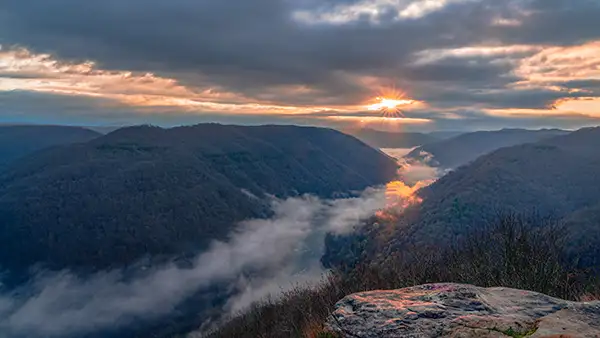
A return to the mountains
What brought you back to your Appalachian roots?
After leaving West Virginia decades ago, I built a life and career elsewhere. I was looking outward—toward new places, new experiences, and opportunities. But returning to the mountains brought something into focus that I had not fully appreciated when I was younger.
The land was familiar, but I saw it differently. I thought about the generations who worked it, the meals that came from it, and the knowledge passed along without anyone thinking to call it heritage. I began to recognize how much of that experience had stayed with me.
It was not simply nostalgia. I felt a renewed responsibility to understand and preserve what those generations had built.

Your grandfather seems to be a central figure in that story. What did he leave you?
My grandfather, Paul “Black” Beane, is still part of the conversation in a way. I sometimes joke that I continue to get farming advice from him. But there is a deeper truth in that.
What I remember is a way of living: working with what the land gave you, making use of what you had, and understanding that a harvest represented time, effort, and care. Those were not abstract principles. They were simply part of everyday life.
When I look back, I realize how much those ordinary routines taught me about patience, resourcefulness, and respect.
There is a remarkable photograph of you using the same harvest buckets your grandfather used decades earlier. Why does that matter?
Because it makes the passage of time visible. The buckets are ordinary objects. But seeing them in use again, roughly 50 years later, connects two generations in a very direct way.
For me, it is a reminder that heritage does not have to live only in photographs or family stories. You can pick it up, put it to work, and make it part of your own life.
 ThenGrandfather with harvest buckets, late 1960s.
 NowFrank Webb with the same buckets, approximately 50 years later.
Food as a way of life
What changed when you started growing food again?
I had spent so much of my working life at a keyboard, focused on communications, strategy, and deadlines. Working with the soil brought a different kind of satisfaction. You plant something, care for it, wait, and eventually discover what the season allows.
There is something grounding about harvesting tomatoes or watching corn grow. It changes your relationship with food. You appreciate the work behind it, and you appreciate the people who do that work every day.
I am not trying to present myself as a professional farmer. I am rediscovering something that was part of my family's life—and sharing why that connection matters.
Is that what you want other people to experience?
Yes, although I do not think everyone needs a farm or a large garden. Grow a little something. Visit a farmers market. Meet a producer. Learn to prepare a seasonal ingredient. Sit down to a meal with people you care about.
The point is not perfection or expertise. It is participation. Food can bring us closer to the land, to each other, and to the places we call home.
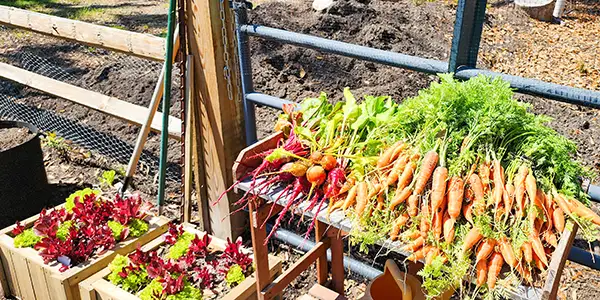
Why Cucina exists
How did that personal rediscovery become Cucina di Madre Terra?
The more I reconnected with my own family's history, the more I thought about the small producers who are still doing this work. Their knowledge, products, and stories deserve attention. But attention alone is not enough.
Producers need customers. Restaurants need credible sourcing relationships. Communities need accessible places to buy local food. And consumers need a way to find and understand what is available.
Cucina grew from the desire to connect those pieces. I wanted to take what I know about storytelling, marketing, and building audiences and apply it to something that feels personally meaningful.
You often say local food needs more than admiration. What do you mean?
People love the idea of supporting farmers and buying local. But good intentions do not necessarily translate into purchases. Convenience, price, familiarity, and simple awareness all influence decisions.
So the question becomes: how do we make local food easier to discover, easier to trust, and easier to include in everyday life? That is where Cucina can make a practical difference.
We can celebrate a producer's story while also helping more people find that producer. We can talk about food heritage while showing someone where to buy the ingredients or experience the traditions today.
Where do restaurants, markets, and destinations fit?
They are essential connections. A chef can introduce diners to an unfamiliar ingredient. A market can turn a producer into a familiar face. A destination can help visitors understand a region through its food culture.
But I want the producer to remain visible in that story. The finished plate matters, of course. So do the people who grew, raised, caught, baked, or made what is on it.
There is also an economic dimension. When a local food system works well, it creates more opportunities for producers and more reasons for consumers to participate.
What we carry forward
How do you balance honoring the past with helping producers succeed in the future?
By understanding that preservation does not mean standing still. We can respect traditional knowledge while helping producers reach new markets, adopt useful tools, and build sustainable businesses.
There is no contradiction between honoring heritage and wanting a farm or food business to prosper. In fact, economic viability is often what makes preservation possible.
The goal is to carry forward what matters and give it a place in contemporary life.
When you think about Cucina years from now, what would make you feel it succeeded?
I would like people to know more about where their food comes from—and feel comfortable acting on that knowledge. I would like more producers to be recognized and supported. I would like local food to be something communities practice regularly, not just something they celebrate occasionally.
And personally, I hope that the simple connection between garden, kitchen, and table remains accessible to another generation.
When I think about my grandfather, those old buckets, and the mountains where I grew up, that is really what comes back to me. We inherit something valuable. The question is what we choose to do with it.
From family roots to community action.
Explore Frank Webb's leadership profile and the mission behind Cucina di Madre Terra.
Editorial note: This is a reconstructed editorial conversation, adapted from Frank Webb's published first-person reflections and Cucina leadership profile. The questions and responses were composed for this feature and are not a verbatim interview. Review and approve first-person wording before publication. Image note: Image slots are deliberately labeled rather than assigned unverified file URLs; replace each with the corresponding original site photograph.